Chimneys and flashing
Chimney and Flashing Leaks
Where the roof meets a chimney, a wall or a window, a strip of lead or a flashing kit keeps the rain out. Wind lifts it, the mortar holding it cracks, and that's where many leaks start. A chimney flashing repair is typically €650 to €2,500.
Tell us in 3 taps and one local roofer rings you back, 6am to 7pm, seven days a week.
Free, no obligation. One local roofer rings you back, 6am to 7pm, seven days a week.
Lead, step by step
On a traditional chimney, lead is dressed up the side of the stack in steps, tucked into the mortar joints, and lapped over soakers under the slates. At the front there's an apron, at the back a small gutter (a back gutter) to throw water round the stack.
Leaks come where the lead has lifted, where the mortar holding it into the joints has fallen out, where the back gutter is blocked, or where someone sealed it with silicone or tape instead of lead, which fails within a few years.
Pots, flaunching and stacks
The cement slope at the top (the flaunching) holds the pots. Cracked flaunching lets rain into the stack, and a loose pot in a gale is a danger to anyone below. A leaning stack is an emergency: keep people away and send it now.
Chimneys still in use for coal, peat or wood go through more heat and moisture than capped ones, so their mortar and flashing wear faster. The area pages show how many homes in each area still heat mainly with solid fuel.
Valleys and walls
Valleys between two slopes are lined with lead or a preformed liner. Where an extension roof meets a house wall, the flashing is chased into the wall. Roof windows come with their own flashing kits. All three get the same storm treatment: lifted edges, blocked water, cracked joints.
What it costs
| Job | Typical cost | What moves the price |
|---|---|---|
| Chimney flashing | €650 to €2,500 | New lead, repointing, a back gutter |
| A valley | €900 to €3,000 | Lead or a liner, the length of it |
| Scaffolding, two-storey house | €1,200 to €2,500 | Chimneys and high roofs often need it |
| Finding and fixing a leak | €300 to €900 | How hard it is to trace; what's found |
Water coming in? Do this first
- Stay safe. Don't go on the roof or up a ladder in wind or rain. Keep clear of anything hanging loose.
- Catch the water. Buckets under drips, move what you can, and switch off lights or sockets near the wet.
- Take photos and video of the damage inside and out, close up and wide, once it's safe.
- Get a roofer out for a temporary repair, and keep every receipt. Insurers usually pay for temporary repairs.
- Tell your insurer as soon as you can.
Roof jobs we pass on
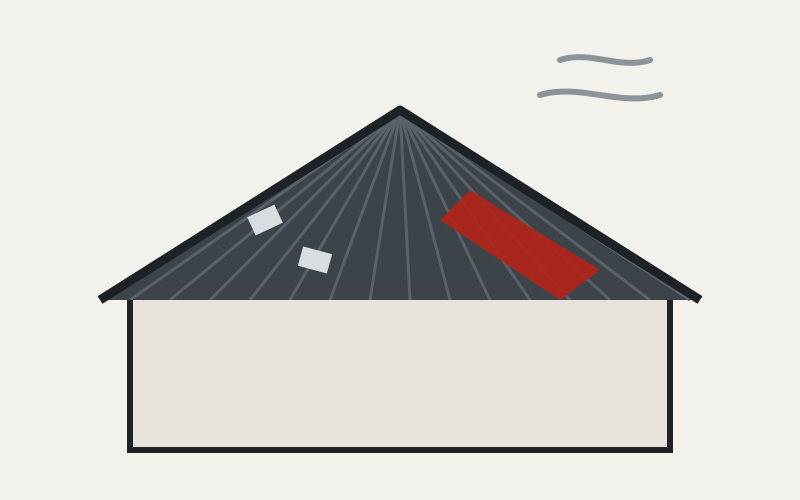 Storm damageSlates off, ridge loose, flashing lifted. €600 to €3,000+.More on storm damage →
 Roof leaksFinding where the water really gets in. €300 to €900.More on roof leaks →
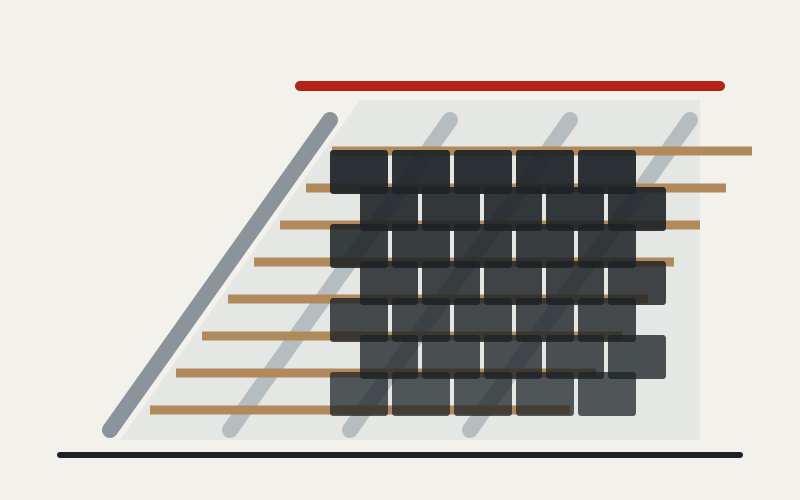 Slipped slates and tilesRefixed or replaced before the wind lifts the next. €350 to €1,100.More on slipped slates and tiles →
 Gutters after a stormDown, loose or overflowing, and the damp it causes.More on gutters after a storm →
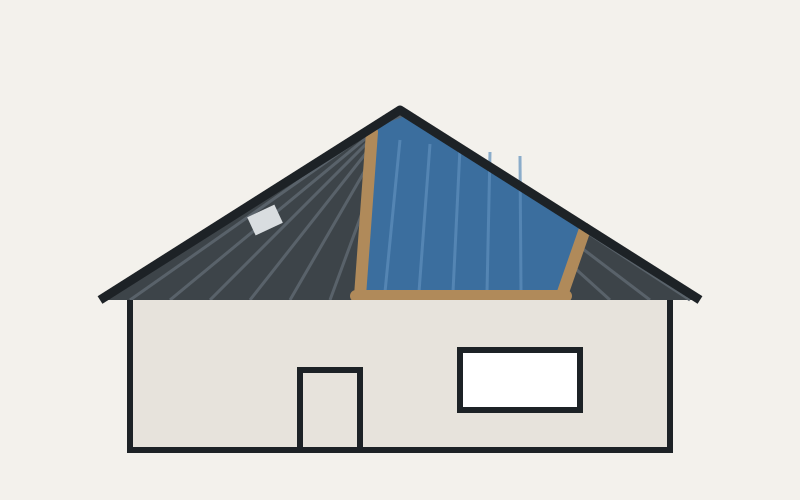 Emergency tarpingKeeping the weather out until the repair.More on emergency tarping →
Every area and town we cover
- Louth49,332 households
- Meath72,549 households
- Monaghan22,855 households
- Cavan28,776 households
- North Dublin107,599 households
- DundalkCo. Louth
- DroghedaCo. Louth
- ArdeeCo. Louth
- NavanCo. Meath
- AshbourneCo. Meath
- TrimCo. Meath
- KellsCo. Meath
- Monaghan townCo. Monaghan
- CarrickmacrossCo. Monaghan
- CastleblayneyCo. Monaghan
- ClonesCo. Monaghan
- Cavan townCo. Cavan
- VirginiaCo. Cavan
- BailieboroughCo. Cavan
- CootehillCo. Cavan
- Swordsnorth Dublin
- Balbriggannorth Dublin
- Malahidenorth Dublin
- Skerriesnorth Dublin
What's happened
Tell us what's happened in 3 taps
Tap what's wrong and leave your number. It goes to one roofing company that covers your area, and they ring you back, 6am to 7pm, seven days a week.
Questions people ask
Can flashing be fixed with sealant?
As a temporary stop, yes. As a repair, no: sealant cracks with sun and frost. Lead dressed and fixed properly lasts decades.
My chimney is leaning after the storm. What do I do?
Keep everyone away from the house below it and the path or road beside it, and send the form now. If it could fall onto a public road, ring 112 or 999.
Roof damaged? Tell us in 3 taps
One local roofer rings you back, 6am to 7pm, seven days a week. Free, no obligation.